Comparing gas and electric tankless water heaters for your Collierville residence
Choosing between gas and electric tankless water heaters in Collierville comes down to your home’s infrastructure, utility rates, and hot water needs. Gas units deliver higher flow rates but require proper venting and gas line sizing. Electric models need substantial electrical capacity but avoid combustion concerns. Both options eliminate the standby heat loss of traditional tanks, saving you money on utility bills over time. Your decision impacts installation costs, monthly expenses, and long-term maintenance requirements. Switching to a Tankless Water Heater in East Memphis (Is It Worth the Investment?).
Key differences at a glance
| Feature | Gas Tankless | Electric Tankless |
|---|---|---|
| Typical Flow Rate | 7-11 GPM | 3-8 GPM |
| Power Source | Natural Gas/Propane | 240V Circuit |
| Installation Cost | $2,500-$4,500 | $1,500-$3,000 |
| Venting Required | Yes (Category III) | No |
| Electrical Panel Impact | Minimal | May need 200A upgrade |
| Best For | Larger households | Smaller homes |
Gas tankless water heaters: pros, cons, and Collierville installation costs
Gas tankless water heaters burn natural gas or propane to heat water on demand through a high-efficiency heat exchanger. These units typically deliver 7-11 gallons per minute, enough for simultaneous showers and appliance use. The combustion process requires Category III stainless steel venting to safely exhaust carbon monoxide outside your home.. Read more about Comparing the cost of a traditional water heater versus a hybrid heat pump model in Collierville.
Installation in Collierville often involves gas line sizing upgrades. Older homes built before 2000 may need 3/4-inch gas lines replaced with 1-inch lines to handle the 150,000-200,000 BTU input required by whole-house units. This upsizing adds $800-$1,200 to your project cost but ensures safe operation.
Venting presents another consideration. Gas units need vertical or horizontal venting through walls or roofs using approved materials. Homes in Collierville’s established neighborhoods like Forest Hill and Tara Oaks often have masonry construction that complicates vent routing, potentially increasing labor costs by 15-20%.
Operating costs favor gas in most cases. Memphis Light, Gas and Water rates for natural gas average $1.10 per therm in 2026, while electricity costs $0.13 per kWh. A gas unit heating 60 gallons daily costs approximately $18-22 monthly versus $25-30 for electric models. Memphis Light, Gas and Water.
Maintenance differs significantly between fuel types. Gas units accumulate scale from Memphis’s hard water, requiring annual descaling with food-grade citric acid. The combustion chamber also needs inspection for soot buildup. Electric units avoid these issues but still need periodic cleaning of inlet screens and flow sensors. How to Tell if You Have a Slab Leak Under Your Memphis Home Foundation.
Life expectancy ranges from 15-20 years for quality gas units versus 10-15 years for electric models. The higher upfront cost of gas ($2,500-$4,500 installed) typically pays for itself through lower operating costs within 4-6 years for households using 80+ gallons daily.
Call (901) 640-3313 today to schedule your inspection.
Electric tankless water heaters: is your Memphis electrical panel ready?
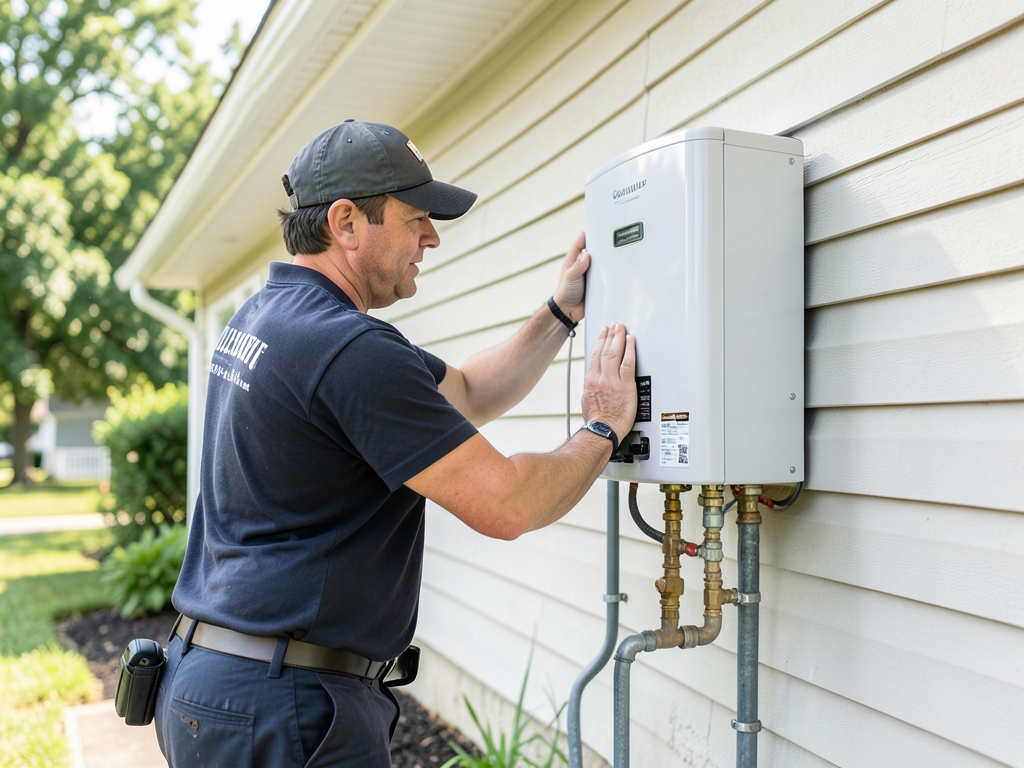
Electric tankless water heaters use high-powered heating elements to instantly warm water as it flows through the unit. These models eliminate combustion concerns and venting requirements, making them ideal for tight spaces or homes where gas service is unavailable.
Power requirements vary dramatically by flow rate. A 4 GPM unit needs 28,000 watts, requiring a 120-amp dedicated circuit. Whole-house models delivering 8 GPM demand 54,000 watts and 225-amp service. Many Collierville homes built before 2010 have 100-amp or 150-amp panels that cannot support these loads.
Electrical upgrades add significant cost. Upgrading from 100-amp to 200-amp service costs $1,500-$2,500. Adding a 225-amp panel runs $2,500-$3,500. These expenses often exceed the water heater cost itself, making the total investment $3,000-$5,000 for electric whole-house units.
Flow rate limitations affect performance. Electric units struggle in winter when groundwater temperatures drop to 55-62°F. A unit rated for 8 GPM at 70°F inlet delivers only 5 GPM during January’s coldest days. This temperature-based reduction means electric models work best for homes with 1-2 bathrooms.. Read more about Deciding between a salt based water softener and a descaler for your Desoto County home.
Installation advantages include simpler permitting and no combustion safety concerns. Electric units mount on any wall with proper clearances and need only water and electrical connections. This simplicity reduces installation time to 2-4 hours versus 6-8 hours for gas units requiring venting and gas line work.
Operating costs remain higher despite efficiency gains. Even with 99% thermal efficiency, electric units cost more to operate due to Memphis’s electricity rates. Monthly costs for a family using 80 gallons daily run $25-30 versus $18-22 for comparable gas units.
Maintenance requirements are minimal. Electric units avoid scale buildup issues that plague gas models, though Memphis’s hard water still requires occasional cleaning of flow sensors and inlet filters. No combustion chamber inspections or venting checks are needed.
Performance consistency appeals to many homeowners. Electric units provide steady hot water without the temperature fluctuations sometimes seen in gas models during high-demand periods. This reliability makes them popular for smaller households in Collierville’s newer developments like Fisher Place and Singleton Lake.
Call (901) 640-3313 today to schedule your inspection.
The Memphis factor: how our groundwater temperature affects your choice
Memphis’s groundwater temperature significantly impacts tankless water heater performance. Our region’s aquifers maintain 55-62°F year-round, much cooler than areas with warmer groundwater. This temperature difference directly affects the gallons per minute your unit can deliver.
Temperature rise calculation determines real-world performance. If you need 120°F shower water and your inlet temperature is 60°F, your unit must achieve a 60°F rise. Gas units handle this better than electric models. A gas unit rated for 9 GPM at 70°F inlet delivers approximately 7 GPM at Memphis’s typical 60°F groundwater.
Seasonal variations compound the challenge. Winter groundwater can drop to 55°F during January’s coldest stretches, reducing flow rates by 10-15% compared to summer performance. Electric units feel this impact more severely due to their lower BTU output compared to gas models.
Household demand patterns matter in Collierville. Many homes here have 2-3 bathrooms plus laundry and dishwashers. A family of four running two showers, a washing machine, and kitchen sink simultaneously needs 6-8 GPM. Gas units handle this demand year-round, while electric units may struggle during winter mornings.
Recovery time affects user experience. Gas units heat water faster, reducing the wait for hot water at distant fixtures. Electric units take longer to reach target temperature, especially noticeable in larger homes common in Collierville’s established neighborhoods like Tara Plantation and Piperton.
Peak demand periods align with Memphis’s climate. Winter mornings see highest simultaneous usage when families prepare for work and school. The cooler groundwater during these months means your unit works hardest exactly when you need it most.
Understanding these temperature effects helps set realistic expectations. A unit rated for 8 GPM might deliver only 5-6 GPM during your coldest winter mornings. This reduction matters less for gas units due to their higher output capacity.
Call (901) 640-3313 today to schedule your inspection.
MLGW utility rates: calculating your long-term savings
Memphis Light, Gas and Water rates directly impact your tankless water heater’s operating costs. Understanding these rates helps calculate true long-term savings beyond installation expenses.
Natural gas rates in 2026 average $1.10 per therm for residential customers. One therm equals 100,000 BTU. A typical gas tankless unit consuming 150,000 BTU hourly costs approximately $1.65 per hour of operation. Most households use 1-2 hours of hot water daily, totaling $30-45 monthly.
Electric rates run $0.13 per kWh. A 28,000-watt electric unit operating one hour consumes 28 kWh, costing $3.64. Daily usage of 1-2 hours results in $110-165 monthly costs. However, electric units achieve 99% efficiency while gas units reach only 82-95% efficiency.
Efficiency differences narrow the cost gap. Gas units waste 5-18% of energy through venting and incomplete combustion. Electric units waste less than 1% as heat. This efficiency advantage reduces the monthly cost difference to $7-15 for typical households.
Time-of-use rates affect electric costs. MLGW offers optional time-of-use pricing where electricity costs $0.09 per kWh during off-peak hours versus $0.18 during peak periods. Scheduling high-demand activities during off-peak times can reduce electric operating costs by 25-35%.
Gas price volatility impacts long-term costs. Natural gas prices fluctuate based on national market conditions, weather patterns, and supply chain factors. Electric rates remain more stable, making budgeting easier for homeowners preferring predictable expenses.
Installation costs vary by fuel type. Gas units require venting materials, gas line modifications, and combustion air considerations. Electric units need only water connections and electrical wiring. These installation differences often exceed $500-1,000 between the two options.
Federal tax credits help offset costs. The 2022 Inflation Reduction Act provides 30% tax credits up to $2,000 for qualifying tankless water heaters. Both gas and electric units meeting Energy Star standards qualify, reducing your net investment regardless of fuel choice.
Energy Star certification ensures efficiency. Look for units with Uniform Energy Factor (UEF) ratings above 0.87 for gas and 0.96 for electric. Higher UEF ratings mean lower operating costs and better performance in Memphis’s climate.
Call (901) 640-3313 today to schedule your inspection.
Maintenance requirements for tankless systems in Shelby County
Memphis’s hard water creates unique maintenance challenges for tankless water heaters. Shelby County’s water contains 120-180 parts per million of dissolved minerals, causing scale buildup that reduces efficiency and shortens equipment life.
Gas units require annual descaling. Scale accumulates on heat exchanger surfaces, reducing heat transfer efficiency by 20-30% within two years without maintenance. Professional descaling involves circulating food-grade citric acid through the system to dissolve mineral deposits. This service costs $150-250 annually. Professional Drain Cleaning Services in Bartlett to Stop Recurring Clogs for Good.
Electric units resist scale better but still need attention. Heating elements in electric units are less prone to scale damage than gas heat exchangers, but inlet filters and flow sensors can clog with mineral deposits. Cleaning these components every 12-18 months prevents flow restrictions.
Memphis’s summer humidity affects venting systems. Gas units with exterior vents can develop condensation issues during humid months. Moisture accumulation in vent pipes causes corrosion and can trigger safety shutdowns. Annual vent inspections catch these problems before they cause system failures.
Water pressure fluctuations in Collierville neighborhoods stress tankless components. Areas near major water mains experience pressure surges that can damage flow sensors and heating elements. Installing pressure regulators protects your investment but adds $300-500 to installation costs.
Hard water treatment extends equipment life. Water softeners reduce mineral content, decreasing scale formation by 80-90%. While softeners add $1,500-2,500 to your project, they can double the life of your tankless water heater and reduce maintenance costs by 60-70%.
Memphis building codes require specific safety features. Tennessee State Plumbing Code Section 1005 mandates pressure relief valves, temperature controls, and proper venting for gas units. Electric units must have dedicated circuits with appropriate overcurrent protection per NEC Article 422. Plumbing Somerville.
Performance monitoring helps catch problems early. Modern tankless units include diagnostic systems that alert you to scale buildup, flow restrictions, or component failures. Responding to these warnings prevents costly emergency repairs. Finding an Emergency Plumber in Germantown Who Actually Shows Up After Hours.
DIY maintenance options exist for homeowners. Monthly filter cleaning and visual inspections take 15 minutes but cannot replace professional descaling. Attempting internal cleaning without proper training risks damaging sensitive components and voiding warranties.
Warranty considerations affect maintenance decisions. Most manufacturers require annual professional maintenance to keep warranties valid. Skipping recommended service can void coverage worth thousands of dollars if major components fail.
Call (901) 640-3313 today to schedule your inspection.
Final verdict: which one should you choose?
Your ideal tankless water heater depends on your home’s characteristics and hot water needs. Gas units excel for larger households with simultaneous hot water demands, while electric models suit smaller homes with simpler requirements.
Household size drives the decision. Families of four or more using multiple showers, laundry, and kitchen facilities simultaneously need 8-10 GPM capacity. Gas units deliver this performance reliably, while electric units struggle during peak demand periods, especially in winter.
Existing infrastructure simplifies installation. Homes with 200-amp electrical service and no gas lines favor electric units. Properties with existing gas service and proper venting capacity lean toward gas models. Matching your choice to current utilities avoids costly upgrades.
Long-term costs favor gas for high usage. Households using 80+ gallons daily save $150-200 annually with gas units despite higher installation costs. Electric units make more sense for light users consuming less than 40 gallons daily where the usage difference doesn’t offset installation premiums.
Space constraints influence mounting options. Electric units mount anywhere with proper clearances and need only water and electrical connections. Gas units require exterior wall access for venting or roof penetration, limiting installation locations in some Collierville homes.
Environmental considerations affect fuel choice. Electric units produce zero on-site emissions, appealing to environmentally conscious homeowners. Gas units emit carbon dioxide and water vapor, though their higher efficiency partially offsets the environmental impact.
Budget constraints impact initial decisions. Electric units cost $500-1,500 less upfront but may require electrical upgrades that eliminate this advantage. Gas units have higher initial costs but lower monthly expenses, making them better for long-term ownership.
Local climate factors favor gas in Memphis. Our cooler groundwater temperatures reduce electric unit performance more severely than gas models. Winter’s higher demand coincides with lower groundwater temperatures, when electric units struggle most.
Future plans influence investment timing. If you plan to expand your home or family within five years, choose the system that accommodates future needs. Gas units handle growth better than electric models limited by electrical capacity.
Professional assessment eliminates guesswork. A licensed plumber can measure your actual hot water demand, evaluate existing utilities, and recommend the optimal solution. This analysis prevents costly mistakes and ensures your investment meets your needs.
Both technologies work well when properly sized and installed. The best choice matches your specific circumstances rather than following general rules. Consider your household patterns, existing infrastructure, and long-term plans when making this important decision.
Call (901) 640-3313 today to schedule your inspection.
Frequently Asked Questions
How long do tankless water heaters last in Memphis?
Quality gas tankless water heaters last 15-20 years with proper maintenance. Electric models typically last 10-15 years. Memphis’s hard water reduces these lifespans by 2-4 years without annual descaling service.
Can I install a tankless water heater myself?
Tennessee plumbing code requires licensed professionals for water heater installation. Gas units involve combustion safety and venting requirements that demand specialized knowledge. DIY installation voids warranties and may violate local codes.
What size tankless water heater do I need?
Size depends on your simultaneous hot water demand. A family of four typically needs 7-9 GPM capacity. Your plumber should calculate your specific requirements based on fixture count, usage patterns, and groundwater temperature.
Are tankless water heaters worth the cost?
Tankless units cost more upfront but save $100-300 annually on utility bills. They also provide unlimited hot water and last twice as long as traditional tanks. Most homeowners recoup the investment within 5-7 years.
Do tankless water heaters work during power outages?
Electric tankless units won’t work without power. Gas models continue operating but may have electronic controls that require backup power. Consider a small battery backup for critical controls if outages are common in your area.
How much space do tankless water heaters save?
Tankless units are wall-mounted and measure 18-28 inches tall, 10-20 inches wide, and 5-10 inches deep. They free up the 5×2-foot floor space occupied by traditional 40-50 gallon tanks. For more information, visit Department of Energy tankless water heater guide.
{
“@context”: “https://schema.org”,
“@type”: “BlogPosting”,
“headline”: “Comparing gas and electric tankless water heaters for your Collierville residence”,
“description”: “Discover the real costs and installation requirements for gas vs electric tankless water heaters in Collierville. Get expert advice from Memphis plumbers.”,
“wordCount”: 2545,
“datePublished”: “2026-05-07T14:37:00.000Z”,
“dateModified”: “2026-05-07T14:37:00.000Z”,
“inLanguage”: “en-US”,
“mainEntityOfPage”: {
“@type”: “WebPage”,
“@id”: “https://aceplumbingmemphis.com”
},
“publisher”: {
“@type”: “LocalBusiness”,
“name”: “Ace Plumbing Memphis”,
“url”: “https://aceplumbingmemphis.com”
},
“author”: {
“@type”: “Organization”,
“name”: “Ace Plumbing Memphis”,
“url”: “https://aceplumbingmemphis.com”
},
“image”: {
“@type”: “ImageObject”,
“url”: “https://aceplumbingmemphis.com/wp-content/uploads/2026/03/comparing-gas-and-electric-tankless-water-heaters-1.png”
}
}
{
“@context”: “https://schema.org”,
“@type”: “Plumber”,
“name”: “Ace Plumbing Memphis”,
“url”: “https://aceplumbingmemphis.com”,
“address”: {
“@type”: “PostalAddress”,
“addressLocality”: “Memphis”
},
“areaServed”: {
“@type”: “City”,
“name”: “Memphis”
}
}
{
“@context”: “https://schema.org”,
“@type”: “FAQPage”,
“mainEntity”: [
{
“@type”: “Question”,
“name”: “Electric tankless water heaters: is your Memphis electrical panel ready?”,
“acceptedAnswer”: {
“@type”: “Answer”,
“text”: “Electric tankless water heaters use high-powered heating elements to instantly warm water as it flows through the unit. These models eliminate combustion concerns and venting requirements, making them ideal for tight spaces or homes where gas service is unavailable.”
}
},
{
“@type”: “Question”,
“name”: “Final verdict: which one should you choose?”,
“acceptedAnswer”: {
“@type”: “Answer”,
“text”: “Your ideal tankless water heater depends on your home’s characteristics and hot water needs. Gas units excel for larger households with simultaneous hot water demands, while electric models suit smaller homes with simpler requirements.”
}
},
{
“@type”: “Question”,
“name”: “How long do tankless water heaters last in Memphis?”,
“acceptedAnswer”: {
“@type”: “Answer”,
“text”: “Quality gas tankless water heaters last 15-20 years with proper maintenance. Electric models typically last 10-15 years. Memphis’s hard water reduces these lifespans by 2-4 years without annual descaling service.”
}
},
{
“@type”: “Question”,
“name”: “Can I install a tankless water heater myself?”,
“acceptedAnswer”: {
“@type”: “Answer”,
“text”: “Tennessee plumbing code requires licensed professionals for water heater installation. Gas units involve combustion safety and venting requirements that demand specialized knowledge. DIY installation voids warranties and may violate local codes.”
}
},
{
“@type”: “Question”,
“name”: “What size tankless water heater do I need?”,
“acceptedAnswer”: {
“@type”: “Answer”,
“text”: “Size depends on your simultaneous hot water demand. A family of four typically needs 7-9 GPM capacity. Your plumber should calculate your specific requirements based on fixture count, usage patterns, and groundwater temperature.”
}
},
{
“@type”: “Question”,
“name”: “Are tankless water heaters worth the cost?”,
“acceptedAnswer”: {
“@type”: “Answer”,
“text”: “Tankless units cost more upfront but save $100-300 annually on utility bills. They also provide unlimited hot water and last twice as long as traditional tanks. Most homeowners recoup the investment within 5-7 years.”
}
},
{
“@type”: “Question”,
“name”: “Do tankless water heaters work during power outages?”,
“acceptedAnswer”: {
“@type”: “Answer”,
“text”: “Electric tankless units won’t work without power. Gas models continue operating but may have electronic controls that require backup power. Consider a small battery backup for critical controls if outages are common in your area.”
}
},
{
“@type”: “Question”,
“name”: “How much space do tankless water heaters save?”,
“acceptedAnswer”: {
“@type”: “Answer”,
“text”: “Tankless units are wall-mounted and measure 18-28 inches tall, 10-20 inches wide, and 5-10 inches deep. They free up the 5×2-foot floor space occupied by traditional 40-50 gallon tanks. For more information, visit Department of Energy tankless water heater guide.”
}
}
]
}
{
“@context”: “https://schema.org”,
“@type”: “BreadcrumbList”,
“itemListElement”: [
{
“@type”: “ListItem”,
“position”: 1,
“name”: “Home”,
“item”: “https://aceplumbingmemphis.com”
},
{
“@type”: “ListItem”,
“position”: 2,
“name”: “Blog”,
“item”: “https://aceplumbingmemphis.com/blog”
},
{
“@type”: “ListItem”,
“position”: 3,
“name”: “Comparing gas and electric tankless water heaters for your Collierville residence”
}
]
}
{
“@context”: “https://schema.org”,
“@type”: “Service”,
“serviceType”: “Plumbing”,
“provider”: {
“@type”: “LocalBusiness”,
“name”: “Ace Plumbing Memphis”,
“url”: “https://aceplumbingmemphis.com”
},
“areaServed”: {
“@type”: “City”,
“name”: “Memphis”
},
“description”: “Discover the real costs and installation requirements for gas vs electric tankless water heaters in Collierville. Get expert advice from Memphis plumbers.”
}