Why your Memphis tap water looks brown after a nearby water main break
When you turn on your faucet and see brown water flowing out, your first thought is probably panic. Is it safe to drink? Will it stain my laundry? What caused this? In Memphis, the most common culprit is a water main break nearby, which stirs up sediment in the pipes. But before you call the plumber, there are a few things you need to know about what’s happening and how to fix it. How to Tell if You Have a Slab Leak Under Your Memphis Home Foundation.
The good news is that in most cases, brown water from a main break is temporary and not harmful. The bad news is that if it doesn’t clear up within a few hours, you might have a bigger problem on your hands. Let’s walk through what’s happening, how to test if it’s safe, and when you need to call in a professional. Professional Drain Cleaning Services in Bartlett to Stop Recurring Clogs for Good.
Immediate Safety Checklist: Can You Drink Brown Water in Memphis?
The first question on everyone’s mind is: is this water safe to use? The answer depends on what’s causing the discoloration. If it’s from a main break, the water is usually still safe for most household uses, but there are some important exceptions.. Read more about Why you need to ditch the plastic water line on your Mud Island refrigerator.
Here’s a quick safety checklist:
- Drinking: If the water is only slightly discolored, it’s generally safe to drink, but let it run until clear first. If it’s very dark or has an odor, don’t drink it.
- Cooking: Avoid using brown water for cooking or making coffee until it runs clear.
- Bathing: The water is usually safe for showering, but avoid getting it in your eyes or mouth.
- Laundry: Don’t wash white clothes until the water is clear. Brown water can stain fabrics permanently.
- Dishwashing: You can wash dishes, but consider using bottled water for the final rinse if you’re concerned.
If you’re unsure, the safest approach is to use bottled water for drinking and cooking until the problem resolves.
Common Causes of Brown Water in Memphis Homes
Brown water can come from two places: the city’s water main system or your home’s plumbing. Understanding the difference is crucial for knowing how to fix it. Plumbing Somerville.
City-side causes:
- Water main breaks: When a pipe breaks, it stirs up sediment that’s been sitting in the pipes for years.
- Hydrant flushing: Fire departments and city workers flush hydrants to test them, which can stir up sediment.
- Construction work: Nearby digging or construction can disturb underground pipes and cause discoloration.
Home-side causes:
- Galvanized pipes: Many older Memphis homes have galvanized steel pipes that rust from the inside out.
- Water heater sediment: Sediment builds up in water heaters over time and can mix with your water.
- Well water: If you have a private well, iron and manganese can cause brown water.
Diagnostic test: If only one faucet has brown water, the problem is likely in your home. If all faucets are affected, it’s probably a city issue.
The Memphis Sand Aquifer and Your Plumbing
Memphis gets its water from the Memphis Sand Aquifer, a vast underground water source that’s naturally high in minerals like iron and manganese. These minerals are perfectly safe to drink, but they can cause staining and discoloration when they oxidize.
Here’s what’s happening at the molecular level: When water sits in pipes, especially in older galvanized steel pipes common in Midtown Memphis (zip codes 38104, 38112), the iron in the water reacts with oxygen and forms rust. This rust builds up as a slimy layer on the inside of pipes. When a main break or hydrant flushing occurs, the sudden change in water pressure stirs up this sediment and sends it flowing into your home. Midtown Sewer Line Repair Without Digging Up Your Entire Yard.
Golden Nugget: The Memphis Sand Aquifer contains dissolved iron levels averaging 0.5-1.0 mg/L, which is why even new homes can experience occasional brown water during system disturbances.
Golden Nugget: Shelby County’s building code (Section 604.7) requires water main pipes to be buried at least 36 inches deep to prevent freezing, but many older neighborhoods have shallower installations from the 1950s-70s that are more prone to breaks.
Step-by-Step: How to Flush Your System
If the brown water is from a main break, you can often clear it yourself with a simple flushing procedure. Here’s how to do it:
- Turn on cold water
Start with the cold water faucet closest to your main water line, usually in the basement or an exterior faucet.
- Let it run
Run the cold water for 20-30 minutes or until it runs clear. Don’t use hot water yet.
- Flush toilets
Flush each toilet 2-3 times to clear the tanks and bowls.
- Run hot water
Once cold water runs clear, turn on hot water at each faucet for 5 minutes.
- Check appliances
Run your washing machine and dishwasher on empty cycles to clear those lines.
Pro tip: If you have a water heater, you might need to flush it separately. Sediment in the tank can continue to cause brown water even after you’ve flushed the lines.
When to Call a Professional Memphis Plumber
While most brown water issues resolve themselves within a few hours, there are times when you need to call a professional. Here are the red flags:
- Water doesn’t clear after 4-6 hours: If flushing doesn’t work, you might have a problem in your home’s plumbing.
- Metallic taste or odor: This could indicate pipe corrosion or contamination.
- Low water pressure: Sediment buildup can restrict water flow and damage fixtures.
- Visible rust particles: Large flakes of rust suggest significant pipe deterioration.
- Leaks or water damage: Brown water accompanied by leaks indicates a serious plumbing issue.
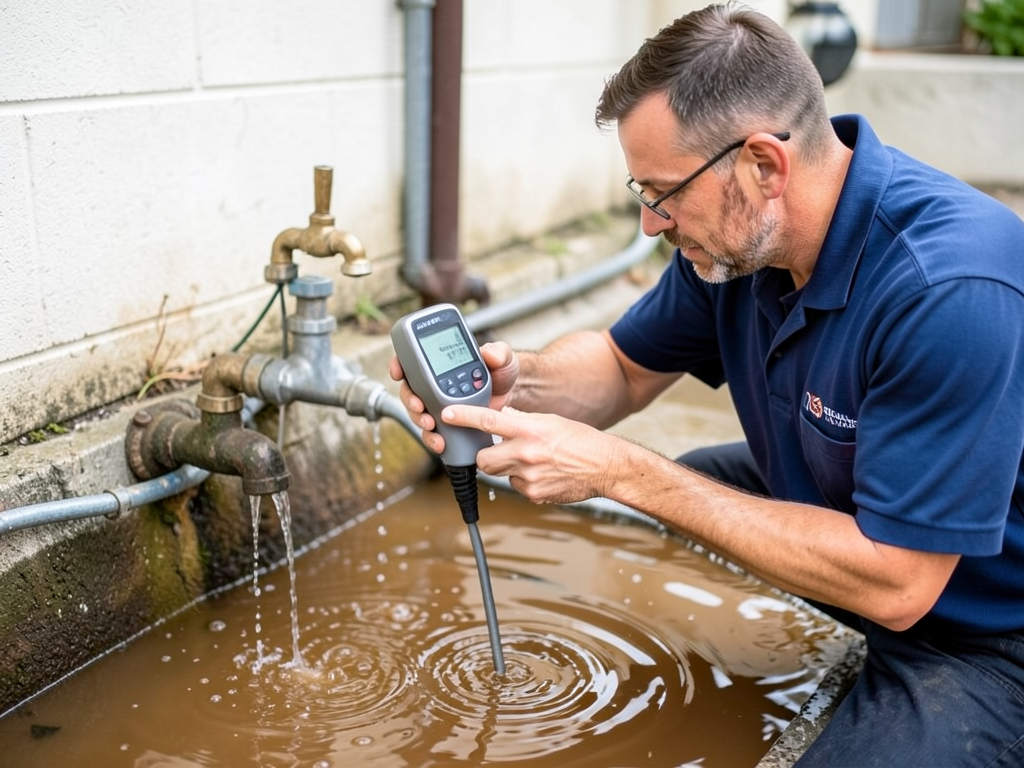
Diagnostic test we perform: We use a digital water quality meter to test for iron content, pH levels, and turbidity (cloudiness). This helps us determine if the issue is from the city supply or your home’s pipes.
If you’re in the Midtown area (zip codes 38104, 38112) or East Memphis (zip codes 38117, 38120), your home is more likely to have older galvanized pipes that need replacement. The average lifespan of galvanized steel pipes is 40-50 years, and many Memphis homes are now approaching or past that age.
Frequently Asked Questions
Is Memphis water safe to drink?
Yes, Memphis water from the Memphis Sand Aquifer is generally very safe to drink. It’s naturally filtered through sand layers and contains beneficial minerals. However, occasional discoloration from main breaks or sediment doesn’t indicate contamination. Sediment Buildup in Pipes.
How long does brown water last after a main break?
Typically 2-6 hours. If it lasts longer than 6 hours, the problem might be in your home’s plumbing or you may need to flush your system more thoroughly.
Can brown water damage my appliances?
Yes, sediment can clog washing machine filters, dishwasher spray arms, and water heater elements. If brown water persists, consider installing a whole-house sediment filter.
Should I call MLGW or a plumber first?
Check MLGW’s website or call them first to see if there are known issues in your area. If it’s a city-wide problem, they’ll usually provide a timeframe for resolution. If it’s isolated to your home, call a plumber.
Long-term Solutions for Memphis Homeowners
If you’re dealing with recurring brown water issues, you might need a more permanent solution. Here are your options:
| Solution | Best For | Cost Range | Lifespan |
|---|---|---|---|
| Whole-house sediment filter | Occasional discoloration | $300-$800 | 6-12 months (filter replacement) |
| Water heater flush | Discoloration from heater | $150-$300 | Annually recommended |
| Galvanized pipe replacement | Recurring brown water | $2,000-$10,000 | 50+ years (PEX or copper) |
Golden Nugget: The EPA’s Lead and Copper Rule (40 CFR 141.80-141.84) requires water utilities to maintain water quality that prevents pipe corrosion, but it doesn’t cover the private plumbing in your home.
For homes in Germantown and Collierville, where newer construction is common, whole-house filtration systems are becoming increasingly popular. These systems can remove sediment, chlorine, and other contaminants before they enter your home’s plumbing.
Impact on Household Appliances
Brown water isn’t just unsightly; it can cause real damage to your appliances and fixtures. Here’s what you need to watch for:
- Washing machines: Sediment can clog the inlet screens and damage the pump. Run an empty cycle with hot water and a cup of white vinegar if you’ve had brown water.
- Dishwashers: Food particles can mix with sediment and create a sludge that coats the spray arms. Clean the filter and run a cleaning cycle.
- Water heaters: Sediment buildup reduces efficiency and can cause popping noises. Flushing your water heater annually prevents this.
- Faucets and showerheads: Mineral deposits can clog aerators and reduce water flow. Remove and soak them in vinegar to clean.
If you notice reduced water pressure after a brown water event, it’s often because sediment has clogged your faucet aerators or showerhead nozzles. This is usually an easy fix: just unscrew the aerator, clean it with vinegar, and reattach it.
Preventing Future Issues
While you can’t prevent main breaks, you can take steps to minimize the impact on your home:
- Install a whole-house sediment filter: This catches particles before they enter your plumbing.
- Flush your water heater annually: Prevents sediment buildup in the tank.
- Replace old galvanized pipes: If your home is over 40 years old, consider upgrading to PEX or copper.
- Monitor water quality: Use a simple test kit to check for iron and other minerals.
- Stay informed: Sign up for MLGW alerts about maintenance and main breaks in your area.
For Memphis residents in areas with older infrastructure like Midtown or Downtown, proactive maintenance is especially important. The combination of aging pipes and the mineral-rich aquifer means these neighborhoods are more prone to brown water events.
Conclusion
Brown tap water after a water main break is a common issue in Memphis, but it doesn’t have to be a major headache. In most cases, it’s temporary and harmless, clearing up within a few hours with simple flushing. However, if the problem persists or you notice other warning signs like low pressure or metallic tastes, it’s time to call in a professional.
At Ace Plumbing Memphis, we understand the unique challenges that Memphis’s water quality and aging infrastructure present. Whether you need a simple flush, a new filtration system, or a complete repipe, we’re here to help you get your water crystal clear again.
Don’t let brown water ruin your day. Call (901) 640-3313 today to schedule your inspection and get your water running clear again. We serve all of Memphis and the surrounding areas, including Germantown, Collierville, and Bartlett.
Need help now? Pick up the phone and call (901) 640-3313. Our experienced plumbers are ready to diagnose and solve your water quality issues quickly and professionally.
Local Resources
For current information about water main breaks and maintenance in your area, visit the MLGW website or call their 24-hour emergency line at (901) 544-6500.
You can also check the Shelby County Health Department’s water quality reports for information about Memphis’s water supply and safety standards.
Remember, clear water is just a phone call away. Contact Ace Plumbing Memphis at (901) 640-3313 for all your water quality and plumbing needs.
You may also find this helpful. Should you choose point-of-use or whole-house water filtration for your South Main loft?.
{
“@context”: “https://schema.org”,
“@type”: “BlogPosting”,
“headline”: “Why your Memphis tap water looks brown after a nearby water main break”,
“description”: “Brown tap water after a water main break in Memphis? Learn what causes it, if it’s safe to drink, and when to call a plumber. Free inspection available.”,
“wordCount”: 1868,
“datePublished”: “2026-05-03T10:46:00.000Z”,
“dateModified”: “2026-05-03T10:46:00.000Z”,
“inLanguage”: “en-US”,
“mainEntityOfPage”: {
“@type”: “WebPage”,
“@id”: “https://aceplumbingmemphis.com”
},
“publisher”: {
“@type”: “LocalBusiness”,
“name”: “Ace Plumbing Memphis”,
“url”: “https://aceplumbingmemphis.com”
},
“author”: {
“@type”: “Organization”,
“name”: “Ace Plumbing Memphis”,
“url”: “https://aceplumbingmemphis.com”
},
“image”: {
“@type”: “ImageObject”,
“url”: “https://aceplumbingmemphis.com/wp-content/uploads/2026/03/why-your-memphis-tap-water-looks-brown-after-a-nea-1.png”
}
}
{
“@context”: “https://schema.org”,
“@type”: “Plumber”,
“name”: “Ace Plumbing Memphis”,
“url”: “https://aceplumbingmemphis.com”,
“address”: {
“@type”: “PostalAddress”,
“addressLocality”: “Memphis”
},
“areaServed”: {
“@type”: “City”,
“name”: “Memphis”
}
}
{
“@context”: “https://schema.org”,
“@type”: “FAQPage”,
“mainEntity”: [
{
“@type”: “Question”,
“name”: “Immediate Safety Checklist: Can You Drink Brown Water in Memphis?”,
“acceptedAnswer”: {
“@type”: “Answer”,
“text”: “The first question on everyone’s mind is: is this water safe to use? The answer depends on what’s causing the discoloration. If it’s from a main break, the water is usually still safe for most household uses, but there are some important exceptions.”
}
},
{
“@type”: “Question”,
“name”: “Is Memphis water safe to drink?”,
“acceptedAnswer”: {
“@type”: “Answer”,
“text”: “Yes, Memphis water from the Memphis Sand Aquifer is generally very safe to drink. It’s naturally filtered through sand layers and contains beneficial minerals. However, occasional discoloration from main breaks or sediment doesn’t indicate contamination. Sediment Buildup in Pipes.”
}
},
{
“@type”: “Question”,
“name”: “How long does brown water last after a main break?”,
“acceptedAnswer”: {
“@type”: “Answer”,
“text”: “Typically 2-6 hours. If it lasts longer than 6 hours, the problem might be in your home’s plumbing or you may need to flush your system more thoroughly.”
}
},
{
“@type”: “Question”,
“name”: “Can brown water damage my appliances?”,
“acceptedAnswer”: {
“@type”: “Answer”,
“text”: “Yes, sediment can clog washing machine filters, dishwasher spray arms, and water heater elements. If brown water persists, consider installing a whole-house sediment filter.”
}
},
{
“@type”: “Question”,
“name”: “Should I call MLGW or a plumber first?”,
“acceptedAnswer”: {
“@type”: “Answer”,
“text”: “Check MLGW’s website or call them first to see if there are known issues in your area. If it’s a city-wide problem, they’ll usually provide a timeframe for resolution. If it’s isolated to your home, call a plumber.”
}
}
]
}
{
“@context”: “https://schema.org”,
“@type”: “HowTo”,
“name”: “How to Flush Your Plumbing System”,
“step”: [
{
“@type”: “HowToStep”,
“position”: 1,
“name”: “Turn on cold water”,
“text”: “Start with the cold water faucet closest to your main water line, usually in the basement or an exterior faucet.”
},
{
“@type”: “HowToStep”,
“position”: 2,
“name”: “Let it run”,
“text”: “Run the cold water for 20-30 minutes or until it runs clear. Don’t use hot water yet.”
},
{
“@type”: “HowToStep”,
“position”: 3,
“name”: “Flush toilets”,
“text”: “Flush each toilet 2-3 times to clear the tanks and bowls.”
},
{
“@type”: “HowToStep”,
“position”: 4,
“name”: “Run hot water”,
“text”: “Once cold water runs clear, turn on hot water at each faucet for 5 minutes.”
},
{
“@type”: “HowToStep”,
“position”: 5,
“name”: “Check appliances”,
“text”: “Run your washing machine and dishwasher on empty cycles to clear those lines.”
}
],
“image”: “https://aceplumbingmemphis.com/wp-content/uploads/2026/03/why-your-memphis-tap-water-looks-brown-after-a-nea-1.png”
}
{
“@context”: “https://schema.org”,
“@type”: “BreadcrumbList”,
“itemListElement”: [
{
“@type”: “ListItem”,
“position”: 1,
“name”: “Home”,
“item”: “https://aceplumbingmemphis.com”
},
{
“@type”: “ListItem”,
“position”: 2,
“name”: “Blog”,
“item”: “https://aceplumbingmemphis.com/blog”
},
{
“@type”: “ListItem”,
“position”: 3,
“name”: “Why your Memphis tap water looks brown after a nearby water main break”
}
]
}
{
“@context”: “https://schema.org”,
“@type”: “Service”,
“serviceType”: “Plumbing”,
“provider”: {
“@type”: “LocalBusiness”,
“name”: “Ace Plumbing Memphis”,
“url”: “https://aceplumbingmemphis.com”
},
“areaServed”: {
“@type”: “City”,
“name”: “Memphis”
},
“description”: “Brown tap water after a water main break in Memphis? Learn what causes it, if it’s safe to drink, and when to call a plumber. Free inspection available.”
}